AI-driven demand for data centres, their need for energy and rising sustainability pressures have placed the data-centre industry in the cross-hairs of society and government. However, while the sector’s expansion comes with increasingly complex requirements, criticisms often overlook the progress that has been made in terms of green power adoption, efficiency and transparency.
“The continued expansion of the cloud, along with the advent of AI, is currently driving significant growth in the sector,” says Christopher Jones, Knight Frank’s head of power procurement & MEP (mechanical, electrical and plumbing) consultancy. “This growth also coincides with a push towards net-zero targets in many countries, which requires significant investment in transmission and distribution networks to replace aging infrastructure and also connect new generation assets, and has resulted in significant grid connection queues, delaying data-centre projects.”
However, Jones also describes an industry which is accelerating to meet its net-zero obligations through increasingly ingenious applications of renewable energy sources. “This is now driving significant change within the data-centre sector,” he says. “The scale of data-centre campuses, along with increasing power densities within data halls, has pushed beyond the design topologies commonly used over the past 10-15 years.”
He notes that integrating renewable generation into a data-centre campus directly can have significant benefits, such as taking control over fluctuating pricing and no longer relying on fossil fuel standby generation. He foresees a “generational change and opportunity for data centres”, which in turn, is being grasped by a number of forward-looking owners and operators in the sector.
Power moves
French entrepreneur, Max-Hervé George, is one such figure backing the sector’s growth. He is chairman and co-CEO of SWI Group, sponsor of the Stoneweg Icona data-centre fund (IDC), which has recently unveiled an ambitious hyperscale strategy.

Our IDC platform drives the development of data centres in Europe’s most strategic locations – powering the future of AI and cloud computing with flexible capital and deep local expertise – Max-Hervé George
To date, IDC has announced plans for five data centres across sites in Ireland, Denmark, Spain, Italy and the UK. The sites, totalling 225 hectares, have 1,116MW of secured/reserved power, with visibility for an additional 563MW.
Another industry mover, Greykite, is exploring the sustainable development of data centres, under its digital sector vertical. Last summer, alongside partner White Star Real Estate, the firm successfully converted a former logistics facility in Warsaw into one of the largest data centres in Poland, now known as Digital Ursus. The 20,000 sq m facility, strategically located just 8 km from downtown Warsaw and 6 km from Chopin Airport, has secured a long-term lease with a leading global data-centre operator.
Dan Valenzano, senior partner, Greykite explains that the firm is not focused on developing data centres from the ground-up due to the “huge capital requirements and back-ended return profiles”. Rather it is industrial-to-data centre conversion projects that look attractive from an investment perspective. “In Warsaw, the tenant is leasing a powered shell from us — they take care of the internal fit-out and equipment,” he says. “We are also exploring phased powered land plays, that is, buying land via structured purchases conditional on power entitlements.”
This well-articulated strategy has drawn further municipalities to working with Greykite, as the firm has become known for progressing development, rather than just flipping sites.
Poland remains an interesting data-centre market currently experiencing a growth spurt, with projections indicating a tripling of power resources by 2030. Warsaw, in particular, is anticipated to witness large-scale data-centre construction activity, with IT load capacity expected to increase from 142.6 MW in 2023 to 348.3 MW by 2029.
AI wake-up call
The sector’s rapid developments represent an important wake-up call for the real estate industry, which needs to become more tech-savvy, says Josh Panknin, director, real estate AI research & innovation at Columbia University. Panknin is leading several sessions at MIPIM designed to help delegates to understand how AI really works and why it matters.

“I think real estate companies are still struggling with technology,” he says. “Other industries are developing and integrating advanced forms of analytics, automation and autonomous systems that provide completely new capabilities and a tremendous amount of efficiency.”
He adds: “But these other industries have heavily committed themselves to technology as a primary driver of their ability to compete. They see technology and top-tier engineers as their biggest asset rather than a cost that needs to be mitigated as much as possible. In contrast, most real estate companies seem to be slowly dipping their toes into technology, trying to avoid mistakes and failures. But these mistakes and failures are a big part of the learning process,” he says.
Climate reporting and financing
In turn, for data centres to become a truly tradeable asset class, they must embrace challenges including reporting on carbon emissions and finance. Dr. Jens Hirsch, chief scientific officer, BuildingMinds, confirms that while a number of data companies are tracking the increasing use of green energy, the risk of “green washing” is high. Goldman Sachs meanwhile projects AI will increase global data-centre demand by 160% by 2030, but says some of the solutions to data-centre design may well involve AI itself. For example, AI-driven optimisation can help reduce cooling costs by up to 50%.
The use of green financing for data centres is likely to become a key part of the accountability equation. In the US, asset manager Nuveen has been underwriting data-centre developments via its sustainable real estate finance division, Nuveen Green Capital. For example, iM Critical last year secured $32.6m in financing to recapitalise an in-development data centre in Miami.
As data centres attract more institutional buyers, sustainable financing will become non-negotiable, says Robert White, managing director, head of green & sustainable hub – Americas, Natixis CIB. “Sustainability-linked loans work well for a devco/holdco piece, because assets are moving in and out,” White says. “You can put metrics in place to ensure that the sustainability of data centres improves over time.”
He argues that the long-term value of assets will become inextricable from their performance and resilience when judged by the capital markets. “Then it will be about identifying those assets that are best in class, that can articulate a strong power usage effectiveness, that water is managed appropriately, that there is a renewable energy strategy or clean energy strategy in place,” he says.
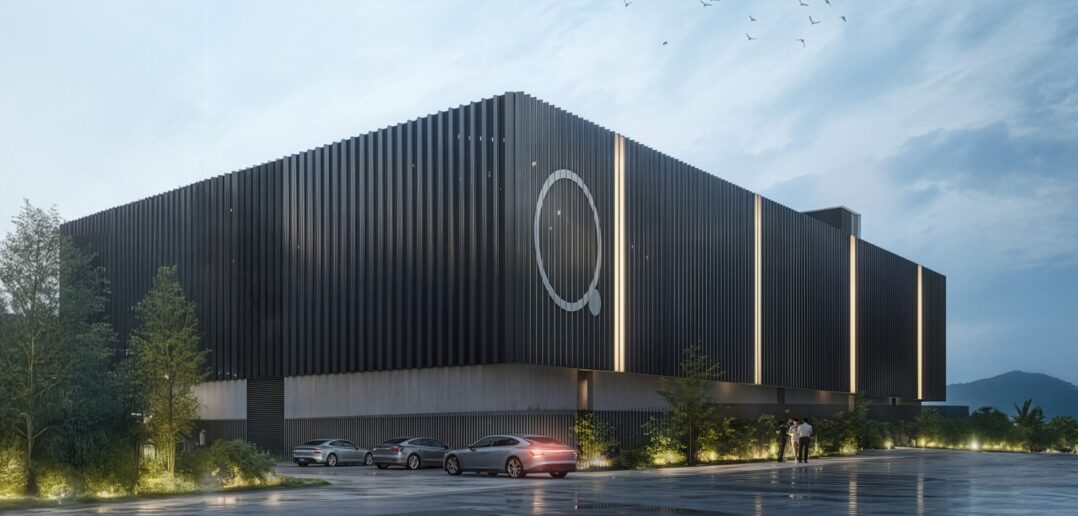
Top image: In Iberia, Azora platform Quetta Data Centres is development new assets