As cities grow denser and buildings become increasingly connected, the role of vertical mobility is rapidly evolving. Elevators are no longer simply technical components but a critical part of how buildings function, perform and create value over time. Bora Gülan, CEO of TK Elevator in Europe and Africa, explains why intelligent, digitally connected mobility systems are becoming essential infrastructure for modern urban ecosystems.

For more than a decade, we have all been hearing that nearly 70 percent of the world’s population will live in cities. That prediction has not only held true. In many regions, it is accelerating.
But urban density alone is not what fascinates me. What truly interests me is how buildings are evolving in response.
During my 20-plus years in the elevator industry, I have seen vertical transportation move from being treated as a mere construction component to becoming a defining factor of how a building performs.
There was a time when our industry faced the risk of commoditization. Elevators were often seen as a technical necessity rather than strategic infrastructure.
I believe the opposite is true today.
Elevators as the Veins of a Building
I have often compared elevators to the veins in the human body.
If veins fail to transport oxygen and energy efficiently, the body cannot function. The same applies to buildings. If people and goods do not move smoothly, the entire ecosystem suffers. Productivity declines. Energy use increases. Tenant satisfaction drops.
Over the years, I have witnessed developments around the world that went to market with an asset value of up to 25 percent lower than its true potential simply because they were equipped with suboptimal vertical transportation solutions. Traffic planning was insufficient. The execution lacked precision.
In dense urban environments and high-rise buildings in particular, mobility defines performance.
Today, it defines value.
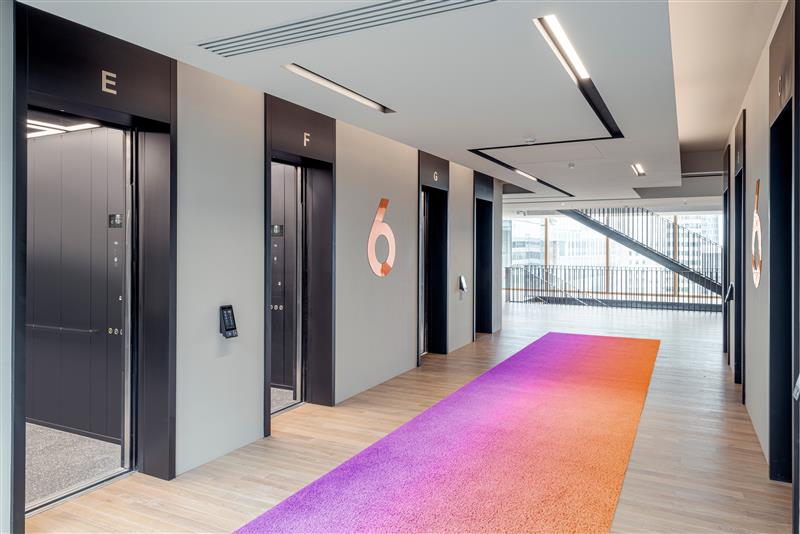
France Altiplano La Defense
From Component to Strategic Infrastructure
Buildings today have evolved into connected ecosystems in which systems communicate, adapt, and optimize. Energy management, access control, climate systems, and mobility are converging into integrated digital environments.
Vertical transportation is no longer a standalone component within this structure. It is part of the digital backbone.
When elevators are intelligently designed and digitally connected, they generate real-time performance data. They allow predictive diagnostics, smart dispatching, and integration into broader building management systems.
For investors and asset managers, this is more than a technical upgrade, but measurable transparency. It enables better lifecycle planning, clearer benchmarking across portfolios, and more informed capital allocation decisions.
Digital mobility is becoming a contributor to asset performance.
Why Digital Leadership Matters
At TK Elevator, we entered the digital service space early. In 2015, we introduced MAX, the elevator industry’s first cloud-based predictive maintenance solution. That decision marked a turning point.
It signaled that mobility would not remain mechanical. It would become intelligent.
Our digital-first elevator platform EOX continues this path. Designed as a natively connected system, it integrates cloud connectivity, advanced energy efficiency, and open interfaces that allow seamless integration with wider building ecosystems.

For developers, this creates a future-ready digital foundation.
For asset managers, it unlocks portfolio-wide visibility.
For passengers, it ensures reliable and seamless mobility every day.
Actually, this commitment to innovation and digital leadership was one of the main reasons I chose to join TK Elevator three years ago. I was convinced that vertical transportation would not be commoditized. It would become more strategic than ever.
High-Rise Performance in the Data Era
In high-rise buildings, mobility planning shapes the structure itself. Early-stage simulations determine shaft configuration, passenger flow, peak traffic patterns, and energy demand. The elevator concept directly influences rentable space, operational efficiency, and long-term building performance.
When connected systems integrate with access control and building management platforms, towers can dynamically adapt to changing usage patterns throughout the day.
This intelligence ensures smoother traffic flow, optimized energy consumption, and greater tenant comfort.
At the same time, digital connectivity must enhance resilience. Compliance with internationally recognized cybersecurity standards such as IEC 62443 and ISO 8102-20 ensures that integration strengthens security rather than creating vulnerabilities.
In this context, mobility systems become enabling infrastructure for urban density, sustainability ambitions, and long-term competitiveness.
From Reactive Maintenance to Predictive Asset Management
The full potential of intelligent mobility unfolds when technology and service converge.
Predictive service models supported by real-time diagnostics and AI-driven analytics allow potential issues to be identified before they disrupt operations. Maintenance shifts from reactive troubleshooting to proactive asset management.
For owners, this supports higher uptime and predictable operating costs.
For facility managers, it creates operational transparency.
For tenants, it ensures dependable daily performance.
Elevators are no longer static equipment installed at handover. They are continuously optimized assets throughout the lifecycle of the building.
Defining the Next Generation of Urban Value
As cities continue to grow upward and inward, the next generation of real estate value will not be determined by architectural distinction alone.
It will depend on how intelligently buildings move people, manage energy, and adapt to change.
Vertical mobility is a relatively small portion of construction cost. But its strategic impact on performance, sustainability, and user experience is disproportionate.
In my view, intelligent mobility is not a technical detail of modern buildings. It is a defining element of urban value creation.
TK Elevator (TKE) is a global leader in vertical transportation and urban mobility. We provide engineering that keeps the world moving, including design, installation, and maintenance of elevators, escalators, walkways, lifts, passenger boarding bridges, stairlifts, platform lifts and home elevators – including multi-brand modernization and service any place, any time. With TK Elevator’s AI and digital solutions there are no longer any limits to urban mobility. TK Elevator became independent following its separation from the thyssenkrupp group in 2020. The company achieved sales of €9.2 billion in fiscal year 2024/2025. With around 50,000 employees, 25,000 service technicians and over 1,000 support centers globally, we are moved by what moves people. TKE – Move Beyond.